
Why builder-grade paint gives up early.
Your five-year-old house is not defective. It was painted to a price, and nobody mentioned that at the sales office.
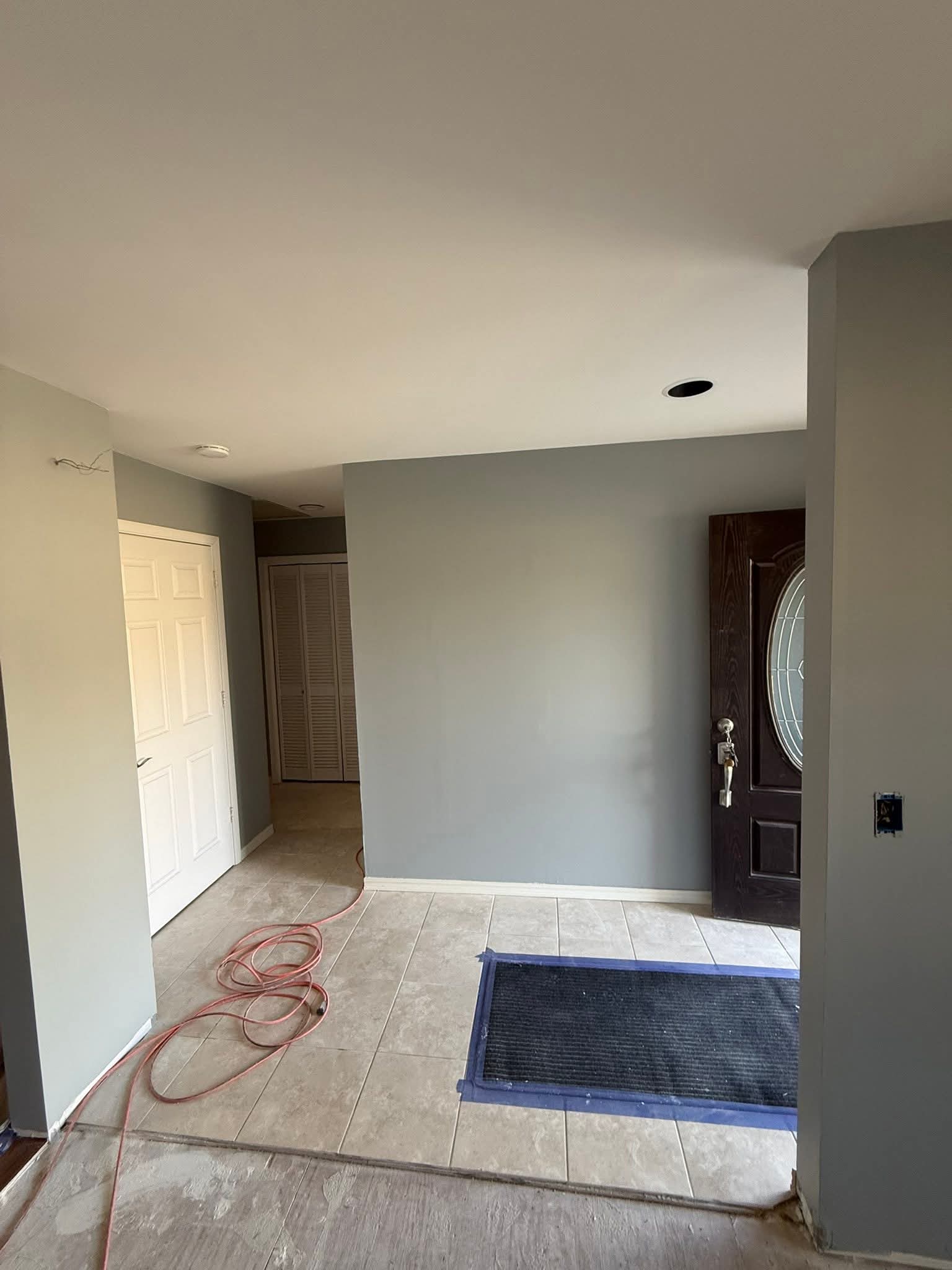
Production builders typically apply a single thin coat of low-cost paint, which is why newly built homes commonly show fading and chalking on south and west elevations within three to five years. This is normal performance for the product rather than a defect or a warranty issue. The practical test is to rub a sun-facing wall: if chalky powder comes off on your hand, the binder has broken down and the surface needs washing and recoating before the coating fails outright.
What actually gets applied
A production builder putting up several hundred houses treats paint as a per-unit cost. The rational decision is the least expensive coating that passes final walkthrough, applied in the fewest passes that achieve coverage.
That typically means a single thin spray coat of a low-grade product, often a contractor-grade flat, with fast caulking at visible joints and limited attention to cut ends and edges.
None of that is fraud. The house passed inspection and the coating did what it was specified to do, which was to look correct on closing day.
Why cheap paint fails faster, mechanically
Paint is pigment suspended in binder. Binder is the expensive part and it is what holds everything to the wall and to itself.
- Less binder means faster ultraviolet breakdown. When ultraviolet destroys binder, pigment is left loose on the surface. That is chalking.
- Cheaper pigments fade faster, particularly in the organic families that produce bright colors.
- Thin film has less to lose. A coating at half the specified thickness does not last half as long; it fails considerably sooner, because weathering works from the surface inward.
- Low binder content burnishes. Inside, that is the shiny patch you get when wiping a scuff off builder flat.
Test yours in ten seconds
Go to the south or west wall in daylight. Rub it firmly with your palm.
| What comes off | Where you are | What to do |
|---|---|---|
| Nothing | Coating is intact | Check again next year |
| Light dust | Early chalking | Plan a repaint in the next season or two |
| Obvious chalky powder | Binder has broken down | Wash and recoat now, before it fails properly |
| Powder plus visible flaking | The coating is failing | Scraping is now part of the job, and the cost has gone up |
The sweet spot is the third row. Wash, prime where needed, two proper coats, done. Wait until the fourth and you are paying for scraping that was avoidable.
Is this a warranty claim?
Almost never. Builder warranties generally cover defects in workmanship and materials for a limited period, and fading of an exterior coating is normally treated as ordinary wear rather than a defect.
It is still worth reading your warranty documents, particularly if you are inside the first couple of years and seeing peeling rather than fading. Peeling in year two is a different conversation from fading in year five, and may indicate a preparation problem at the time of construction.
What a proper repaint changes
- Two full coats to the manufacturer's specified film thickness, which is the single biggest factor in service life.
- A named product chosen for the surface, rather than whatever was cheapest that week.
- Every joint caulked, with failed production caulk cut out rather than coated over.
- Cut ends sealed on hardboard and fiber cement, which is where water gets into a board.
- Proper sheens inside, eggshell and satin where they belong, so walls can actually be cleaned without burnishing.
Realistically, a well-executed repaint with quality product should give you substantially longer service than the original, which is the whole argument for spending more than the builder did.
Do the whole thing at once
It is tempting to do the failing elevation and leave the rest. On an exterior that usually reads badly, because the new work makes the old work look worse than it did before. One mobilization also costs less than two.
If budget genuinely requires phasing, do south and west first. They are failing first for a reason.
Common questions
Why is my new house already fading?
Production builders apply a single thin coat of low-cost paint. Less binder means ultraviolet breaks it down faster, and thin film weathers through sooner. Fading at three to five years is normal performance for that product.
Can I claim builder paint failure on warranty?
Usually not. Builder warranties generally treat exterior coating fade as ordinary wear. Peeling within the first couple of years is a different conversation and may indicate a preparation problem, so read your documents.
How do I know when to repaint?
Rub a sun-facing wall. Light dust means plan it; obvious chalky powder means do it now; powder plus flaking means you have waited too long and scraping is now part of the job.
What is chalking?
Ultraviolet destroying the binder in the coating, leaving loose pigment on the surface. It comes off on your hand, and anything painted over it will fail because nothing is holding it on.
Should I repaint the whole exterior or just the bad side?
Whole, if you can. New work next to old makes the old look worse, and one mobilization costs less than two. If budget forces phasing, do south and west first.
Why does builder paint burnish when I wipe it?
Low binder content. There is not enough holding the surface together, so rubbing polishes it and leaves a permanent shiny patch.
Request your free estimate
Tell us what needs painting and send a few photos. We cover Brighton and every town along the corridor, and most projects can be priced without a site visit.
Rather talk? 720-208-5645